

A New Era for Quantum Manufacturing
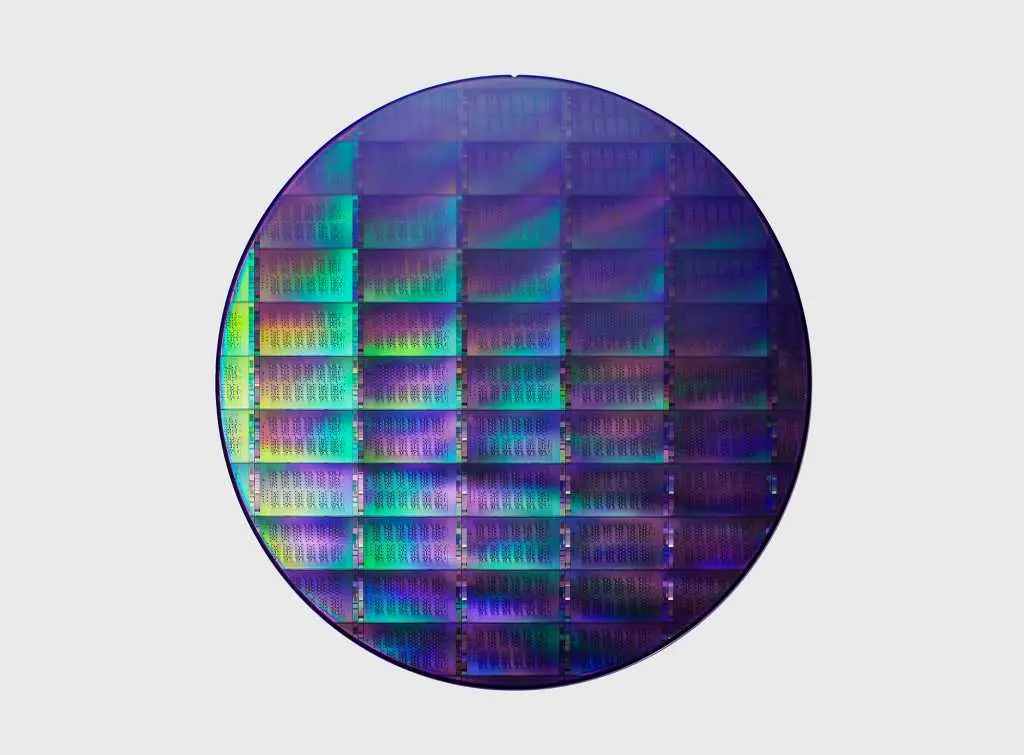
The US government has awarded IBM $1 billion to help establish the first purpose-built quantum chip fabrication unit in the United States. The Trump administration's investment is being matched by IBM itself, resulting in the formation of a new company called Anderon. This new business will build its factory in Albany, New York, marking a significant milestone in the commercialization of quantum computing.
IBM has been a pioneer in quantum computing for decades, with its work in silicon wafer fabrication being a key to its success. The company's CEO, Arvind Krishna, emphasized that the new foundry will be critical to enabling a broader quantum technology landscape. Anderon, with IBM's help, will develop quantum wafers for a number of hardware vendors, positioning itself to fuel America's fast-growing quantum technology industry.
The announcement comes as part of a broader government initiative to invest in quantum-related companies. GlobalFoundries, D-Wave Quantum, and Rigetti Computing also benefited from the administration's interest in the technology. This injection of capital underscores the strategic importance of quantum computing for national security and economic competitiveness.
Why Dedicated Fabrication Matters
Unlike classical chips, quantum processors require extremely precise manufacturing techniques to maintain the fragile quantum states necessary for computation. Current quantum chips are often fabricated in general-purpose semiconductor fabs, which can introduce impurities and inconsistencies. A purpose-built quantum chip foundry can optimize every step of the process—from material selection to lithography to packaging—specifically for qubit performance.
IBM's existing quantum processors, such as the 127-qubit Eagle and the 433-qubit Osprey, have been produced using modified conventional processes. The new foundry will allow for dedicated lines that can scale qubit counts into the thousands while improving coherence times and gate fidelities. This is essential for achieving fault-tolerant quantum computing, which is the industry's long-term goal.
The Albany location was chosen for several reasons: proximity to IBM's research labs in Yorktown Heights, access to a skilled workforce from nearby universities like SUNY Albany and Rensselaer Polytechnic Institute, and existing infrastructure from New York's investment in semiconductor R&D. The state has been actively courting chip makers, offering tax incentives and grants to attract advanced manufacturing facilities.
IBM's Quantum Computing Legacy
IBM has been at the forefront of quantum computing since the early 1980s, when its researchers first began exploring quantum information theory. The company launched the IBM Q Network in 2016, a global community of Fortune 500 companies, academic institutions, and startups working to advance quantum computing. In 2021, IBM unveiled its 127-qubit Eagle processor, the first quantum processor to exceed 100 qubits. The following year, it introduced the 433-qubit Osprey, and plans for a 1,121-qubit Condor processor are on the horizon.
Beyond hardware, IBM has developed a robust software stack, including Qiskit, an open-source framework for quantum computing that allows developers to design and run experiments. The company also offers cloud access to its quantum systems through the IBM Quantum Experience, which has attracted over 400,000 users. These efforts position IBM as a leader not just in quantum hardware but in the ecosystem that surrounds it.
The creation of Anderon represents a logical next step for IBM: spinning out its manufacturing capabilities into a separate entity that can serve the entire industry. This mirrors the approach taken by other technology giants, such as Intel's spin-off of its memory business into Solidigm. By operating as an independent company, Anderon can focus on efficiency and customer service without being constrained by IBM's internal priorities.
The US government's investment is part of a larger push to strengthen domestic semiconductor manufacturing. The CHIPS and Science Act, passed in 2022, allocated $52 billion to boost American chip production. While that legislation primarily targets classical chips, the quantum foundry initiative draws on the same rationale: reducing dependence on foreign supply chains and fostering homegrown innovation. The Department of Energy and the Department of Defense have both expressed interest in quantum technology for applications ranging from drug discovery to cryptography.
Other Beneficiaries of Quantum Funding
The administration's quantum investments extend beyond IBM. GlobalFoundries, a leading semiconductor manufacturer, received funding to develop a quantum-ready fabrication line at its Fab 8 facility in Malta, New York, just a few miles from Anderon's planned site. D-Wave Quantum, a pioneer in quantum annealing, was awarded grants to scale its Advantage2 processor. Rigetti Computing, which builds superconducting quantum processors, also secured funding to expand its Fab-1 facility in Fremont, California.
This multi-pronged approach ensures that the United States covers a range of quantum technologies, from gate-based systems (IBM, Rigetti) to quantum annealing (D-Wave) to specialized foundry services (GlobalFoundries). By supporting multiple players, the government aims to create a robust quantum supply chain that can support both research and commercial applications.
The investments also signal a shift from theoretical research to practical engineering. Quantum computing has long been hampered by the 'valley of death' between laboratory breakthroughs and production-ready systems. With dedicated fabrication resources, companies can accelerate the iteration cycle, moving from design to test to manufacturing in weeks rather than years. This will be critical for delivering quantum advantage in areas such as materials science, financial modeling, and artificial intelligence.
As construction begins on the Anderon facility in Albany, the quantum computing community watches with cautious optimism. The path to fault-tolerant quantum computers is still long, but dedicated chip foundries represent a crucial stepping stone. By providing the infrastructure needed to build reliable, scalable quantum processors, the US government and IBM are laying the foundation for a new generation of computing that could transform industries and redefine what's possible.
Source: Network World News