

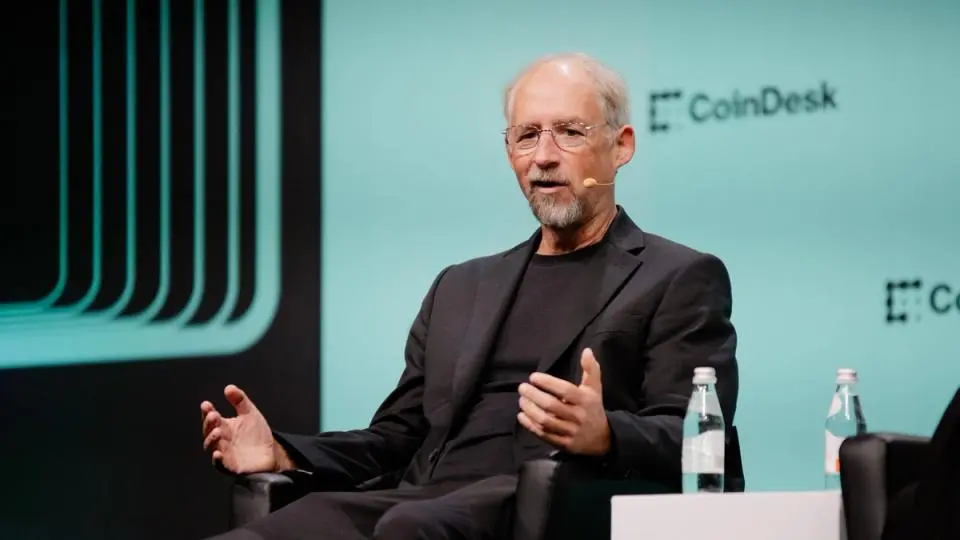
MIAMI — In a keynote address at Consensus 2026, Blockstream CEO Dr. Adam Back delivered a sharp critique of the current decentralized finance (DeFi) landscape, arguing that a wave of high-profile exploits is driving institutional capital toward Bitcoin's more conservative security model. Speaking to a packed audience, Back outlined why he believes Bitcoin is winning what he called the "DeFi security war," and predicted that sovereign wealth funds and pension funds will lead the next major wave of adoption.
Bitcoin: the original security-first blockchain
Adam Back is a pioneer in cryptography and a key figure in the early Bitcoin community. He is most famous for inventing Hashcash, a proof-of-work system that later became the foundation of Bitcoin's mining algorithm. As CEO of Blockstream, he has led development of sidechains like Liquid and is a vocal advocate for Bitcoin's layered scaling approach. Back has long emphasized caution and security over rapid feature expansion, a stance that initially seemed at odds with the booming Ethereum-based DeFi ecosystem.
But recent events have vindicated his position. The year 2025 and early 2026 have seen a series of devastating DeFi exploits on Ethereum and other smart contract platforms, with total losses exceeding $3 billion according to multiple security audits. Hackers targeted bridges, lending protocols, and automated market makers, often exploiting complex interactions between smart contracts. In comparison, Bitcoin's core blockchain has experienced far fewer security breaches, largely due to its deliberately simple scripting language and the conservative, battle-tested nature of its codebase.
Bitcoin's game theory and security model
Back explained that Bitcoin's design philosophy is rooted in "game theory and security first." The Bitcoin network's security model relies on a massive, decentralized hash rate and a transparent ledger that makes attacks prohibitively expensive. In contrast, many DeFi protocols are built on layers of abstraction—smart contracts on top of virtual machines on top of blockchains—each introducing new attack surfaces. "You cannot bolt security onto a system after it's built," Back told the audience. "You have to design it in from the start, and Bitcoin was designed that way."
He also pointed to the growing trend of institutional investors using Bitcoin as a base layer for tokenization. Unlike Ethereum-based or sidechain-based tokens, assets issued via Bitcoin layer-2 solutions like the Lightning Network or Liquid benefit from Bitcoin's security if properly designed. "Bitcoin is not trying to be everything to everyone. It's trying to be a rock-solid foundation," Back said. "That's exactly what institutions need."
DeFi exploits: a cautionary tale
Back referenced several notable incidents during his talk. The $600 million Ronin bridge hack in 2022, the $200 million Nomad bridge collapse, and the more recent $400 million exploit of a leading Ethereum lending protocol in early 2026. Each case involved complex code, multi-signature failures, or oracle manipulation. The cumulative effect, Back argued, has been a crisis of confidence in DeFi among institutional players.
"Every time a DeFi protocol gets hacked, it reinforces a simple lesson: complexity is the enemy of security," Back stated. "Bitcoin has been operating for over 15 years without a single major protocol-level hack. That is the track record institutions want."
Bitcoin layer-2 systems: security without sacrifice
One of the core themes of Back's address was the potential of Bitcoin layer-2 systems to bring smart contract functionality and decentralized finance capabilities without compromising Bitcoin's core security assumptions. He highlighted Blockstream's Liquid Network, a federated sidechain that has been used for asset issuance and confidential transactions by institutions. He also mentioned the Lightning Network for fast, low-cost payments, and emerging projects like RGB and Taproot Assets.
"We can have programmability, tokenization, and DeFi—on Bitcoin," Back said. "But we do it in layers. The base layer remains simple and secure. The second layers add features, but they inherit the security of Bitcoin by anchoring their state to the main chain." He contrasted this with Ethereum's approach of baking complexity directly into the base layer, which he argued introduces systemic risk.
Back acknowledged that Bitcoin's layer-2 ecosystem is still nascent compared to Ethereum's smart contract platform. However, he noted that institutional demand is driving rapid development. Several major banks are already experimenting with tokenized bonds on Liquid, and projects like the Hong Kong Monetary Authority's CBDC pilot have used a Bitcoin-based blockchain for testing.
The next wave: sovereigns and pension funds
Back made a bold prediction about the next phase of Bitcoin adoption. He argued that the current retail-driven cycles are giving way to a wave of institutional allocations from sovereign wealth funds, central banks, and pension funds. He cited examples like the Norwegian sovereign wealth fund's indirect exposure via microStrategy holdings, and the more direct purchases by El Salvador and Bhutan.
"Sovereigns are risk-averse by nature. They cannot afford to lose principal due to a protocol bug or a hack. That is why they are increasingly looking at Bitcoin—not Ethereum, not Solana, not any other high-risk platform—as the only digital asset with a proven security track record," Back said.
He also pointed to recent regulatory developments, such as the CLARITY Act in the United States, which provides a clear regulatory framework for digital assets. "Regulation is not the enemy of Bitcoin; it's the friend of responsible adoption. When institutional investors know the rules, they can allocate capital more confidently," he added.
To support his case, Back presented data showing that Bitcoin's annualized volatility has been declining steadily since 2018, making it more attractive for long-term portfolio allocations. He also noted that the number of Bitcoin addresses holding more than $1 million worth of BTC—often considered a proxy for institutional accumulation—has increased by over 300% in the past year.
Industry reaction and debate
Back's comments drew both applause and criticism during the conference. Some attendees from the Ethereum ecosystem argued that Bitcoin's limited programmability makes it unsuitable for complex financial applications. Others countered that the recent DeFi exploits underscore the need for a more cautious approach.
Ethereum co-founder Vitalik Buterin, who spoke at the same conference but on a different panel, acknowledged the security challenges while defending the importance of innovation. "We are learning from mistakes. Each exploit teaches us how to build better bridges, better oracles, and better smart contracts. The path to maturity is not without scars," Buterin said.
Back was unimpressed. "Learning from mistakes is fine in academic research. But when you're talking about retirement savings and national reserves, you cannot afford to make those mistakes. Bitcoin has already paid the price in its early years with minor bugs, and those lessons are baked into its design."
Bitcoin's conservative design philosophy
A key part of Back's argument rested on Bitcoin's conservative upgrade process. Changes to the Bitcoin protocol are notoriously slow, requiring broad consensus among miners, developers, and users. This resistance to change, often criticized as "stagnation," is actually a feature, Back argued. It prevents risky changes from being pushed through without sufficient testing.
"Every line of Bitcoin's code has been scrutinized by thousands of eyes over a decade. That is why we don't have re-entrancy attacks or flash loan exploits on the base layer. It's not because we're smarter; it's because we're more cautious," he said.
Back also touched on the environmental criticism often leveled at Bitcoin, noting that recent studies show Bitcoin mining increasingly uses renewable or waste energy sources. He cited a report from the Bitcoin Mining Council indicating that over 60% of mining energy now comes from sustainable sources. "Security needs energy. And that energy is increasingly clean. It's a trade-off institutions are willing to make for a secure, censorship-resistant asset."
Tokenization and the future of finance
Back closed his remarks by emphasizing that tokenization of real-world assets—stocks, bonds, real estate, commodities—is inevitable, but that the underlying infrastructure must be secure. "Wall Street is racing to tokenize everything. But if that tokenization is built on a fragile foundation, the entire financial system becomes fragile. Bitcoin offers a resilient foundation."
He pointed to projects like the CNAF (Coalition for Networked Asset Finance) that are exploring Bitcoin-based token standards. He also mentioned that several large asset managers, including BlackRock and Fidelity, have started to allocate funds to Bitcoin-native asset platforms.
"This is not about Bitcoin vs. Ethereum. It's about doing it right. Bitcoin has the security war won. Now we need to build the features on top, carefully and deliberately," Back concluded. The audience gave a standing ovation, reflecting the growing sentiment among many in the crypto industry that the pendulum is swinging back toward security-centric blockchain design.
As the conference continued, panel discussions on DeFi security, regulatory compliance, and institutional adoption all referenced Back's keynote. The message was clear: in a year marked by billions in losses from DeFi hacks, Bitcoin's simplicity is looking increasingly like the ultimate competitive advantage.
Source: Coindesk News