

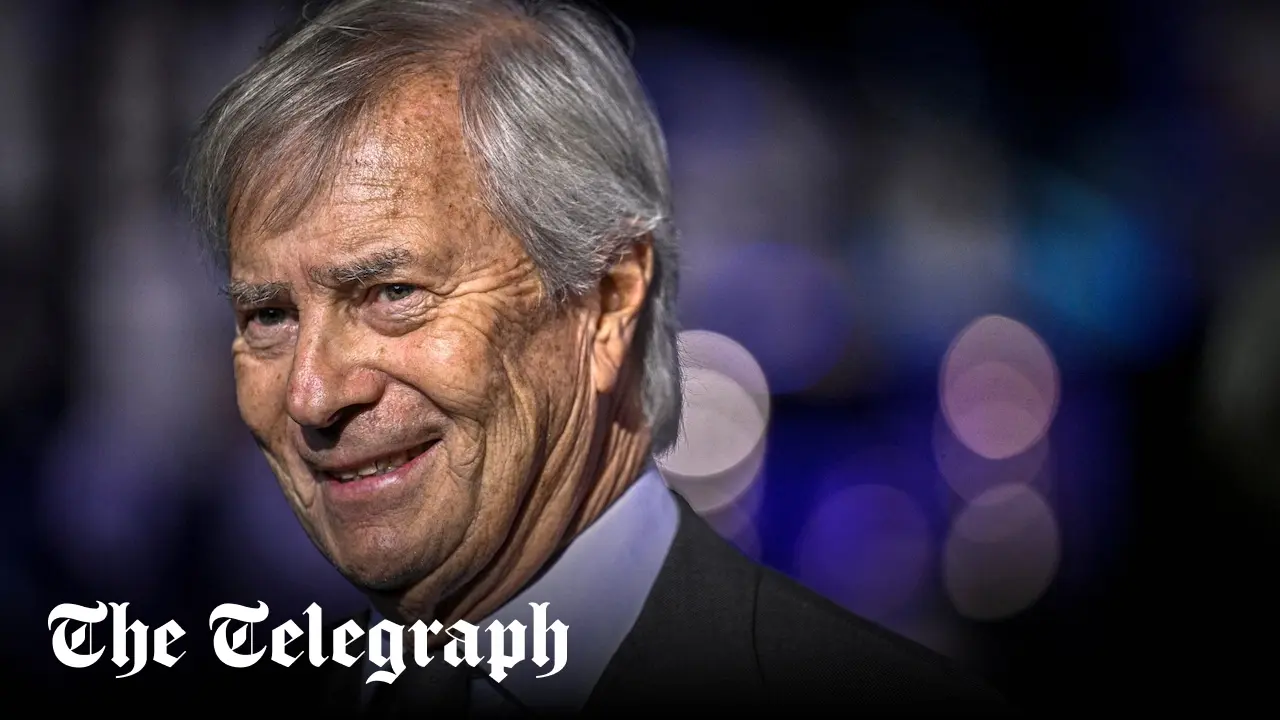
The Cannes Film Festival, traditionally a celebration of French cinematic artistry, has this year become the latest battleground in France's intensifying culture war. At the heart of the conflict is Vincent Bolloré, the conservative billionaire whose media conglomerate Vivendi controls Canal+, the country's largest private film financier. A dispute has erupted between the film establishment and Bolloré, with over 3,500 actors, directors, producers and technicians signing an open letter published in the left-leaning daily Libération. They warn of what they call 'the growing grip of the far-Right' on French cinema, specifically targeting Bolloré's acquisition of the UGC cinema chain. The signatories, who include international stars such as Juliette Binoche, Mark Ruffalo, Javier Bardem and Adèle Haenel, accuse Bolloré of pursuing 'a civilisational project – reactionary and far Right' through his television channels and publishing houses, and caution that French cinema risks a 'fascist takeover of the collective imagination'.
The Open Letter and Immediate Backlash
The open letter, initially signed by 600 industry figures, quickly gained traction, more than doubling overnight after Canal+ chairman Maxime Saada publicly blacklisted those who signed. At a producers' brunch in Cannes, Saada declared, 'I no longer wish Canal to work with the people who signed this petition. I cannot accept working with people who call us crypto-fascist.' This aggressive stance only fueled the controversy, prompting more professionals to add their names in solidarity. Adèle Exarchopoulos, whose film Garance is a potential Palme d'Or winner, stated, 'You cannot be afraid of losing your work just because you express a collective concern.' Arthur Harari, director of the competing film The Unknown, was blunter, describing the incident as exposing 'the problem of having the first private contributor to French cinema in the hands of a crypto-fascist.'
Boris Lojkine, director of Souleymane's Story – a migrant drama co-financed by Canal+ – clarified that the revolt was not aimed at the channel's film teams but at broader concerns. 'I have no reason to complain, either individually or collectively, about Canal+’s film policy,' he told The Telegraph. 'We’ve got nothing against the Canal+ film teams, we’ve got nothing against the choices that have been made at Canal+. No, we’re raising a concern.' Some signatories admitted there are not yet 'concrete, proven examples' of meddling in film choices, but Rosalie Brun of the French film directors’ body SRF argued the industry must watch closely because 'it could happen very quickly.'
Vincent Bolloré’s Media Empire and Political Ambitions
Vincent Bolloré, 73, has built a vast media empire that includes CNews (often compared to Fox News), Europe 1, Paris Match, Le Journal du Dimanche, and the publishing house Fayard, which released nationalist frontrunner Jordan Bardella’s latest book. Last month, Bolloré ousted Olivier Nora, head of Grasset, another prominent publishing house he recently acquired, triggering a revolt by over 100 authors. His growing reach across France’s media landscape has unsettled critics, who accuse him of seeking to install a right-wing government by fanning nationalist narratives. Bolloré’s defenders, however, view the dispute as a pampered, subsidized, left-wing cultural elite turning on the company that finances its films while crying 'fascism' whenever their dominance is challenged.
David Lisnard, the conservative mayor of Cannes and a presidential contender, remarked that the signatories had 'bitten the hand that feeds them' and 'should have kept quiet.' Philippe Ballard, a National Rally MP and former television presenter, dismissed the revolt as 'a little clique that’s all in it together,' adding, 'So-called wokeism, often classified as Left-wing, doesn’t like being disturbed in its little habits. If they don’t want Canal+, they just shouldn’t accept Canal+’s money. It’s as simple as that.' Ballard asserted that the film world had 'lost the culture war' and that 'when you win the culture war, political victory is just around the corner.'
Political Polarization and the 2027 Presidential Election
The Cannes row is a flashpoint in France’s deepening political polarization ahead of the 2027 presidential election. Jordan Bardella, the National Rally president, has argued that France faces a 'choice of civilisation.' Bolloré’s media outlets are seen as amplifiers of nationalist and conservative voices, and his critics fear that his influence could sway public opinion toward far-right policies that would dismantle the country’s cultural exception model. The National Rally, led by Marine Le Pen, has long advocated for tighter control over media and culture, viewing the current system as dominated by a left-wing elite. Ballard stated that his party supports 'audiovisual sovereignty' and would not abandon French cinema, but he called the National Film Board (CNC) a 'clique' mired in 'cronyism' that requires a total overhaul.
Critics of the National Rally see a paradox in a supposedly patriotic party targeting one of France’s flagship soft-power industries. Boris Lojkine warned that if the National Rally came to power and implemented such plans, 'It will be a fight.' He emphasized that cinema is 'part of France’s soft power' and 'the greatness of France,' adding, 'It would be stupid to dismantle that.' The stakes are high because France’s film funding system is unique: Canal+ is legally obliged to invest part of its revenues in French cinema, spending 160 million euros (£135m) this year, co-financing roughly half of French films, including 49 at Cannes and 13 in competition. This arrangement is a cornerstone of France's 'exception culturelle,' the state-backed model that has helped make the country one of the world's leading film powers.
Divisions Within the Film Industry
The controversy has divided the film community. Some prominent figures, like Mathieu Kassovitz of Amélie, have defended Canal+, stating, 'no film maker has been censored' and the channel 'does a very good job.' Others, like the Federation of Screenwriters in Europe, claim that the fears are already substantiated by works affected 'in their financing, their content or their distribution,' including two films reportedly excluded from Canal+’s main funding under the phrase: 'No queers, no trade unionists.' A senior French producer, speaking anonymously, described both camps as being 'in the crossfire of preventive extremism against something that brings people together, namely cinema.'
The dispute goes beyond a simple culture-war spat; it is a battle over who owns the narrative in France. Bolloré’s growing reach has unsettled not only filmmakers but also politicians and the public. The Cannes festival, once a symbol of artistic unity, now mirrors the fractures in French society. As the 2027 election approaches, the clash between Bolloré’s media empire and the film establishment will likely intensify, raising fundamental questions about freedom of expression, media concentration, and the future of French cultural policy.
Source: The Telegraph News