

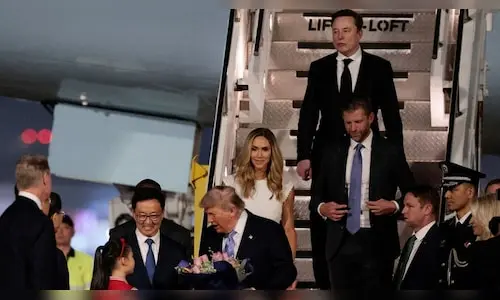
Elon Musk, the world's richest person and CEO of Tesla, SpaceX, and several other ventures, made headlines once again by flying to China alongside U.S. President Donald Trump for a state visit from May 13 to 15. The trip came at a particularly precarious time for Musk: he was actively embroiled in a high-stakes $150 billion lawsuit against OpenAI and its founders, Sam Altman and Greg Brockman, and a federal judge had explicitly placed him on recall status in that trial.
The lawsuit, filed in San Francisco federal court, accuses OpenAI of abandoning its original nonprofit mission to develop artificial intelligence for the benefit of humanity, instead becoming a for-profit juggernaut beholden to Microsoft and other investors. Musk, an early co-founder of OpenAI who left the board in 2018, alleges that the company's pivot violates its founding agreements and asks the court to dissolve the for-profit entity and award damages to the OpenAI nonprofit.
During the trial, which began in April 2025, Judge Yvonne Gonzalez Rogers had allowed Musk to testify but explicitly told him, "Mr Musk, you are not excused, but you can leave for the day." This placed him on recall status, meaning he could be called back to the witness stand at any moment. Despite this, Musk decided to leave the country without obtaining explicit permission from the court. Sources close to the matter told NBC News that Musk departed with Trump’s entourage without informing the judge or securing a formal release from recall obligations.
Legal experts were quick to analyze the situation. Jeffrey Bellin, a law professor at Vanderbilt University, noted that recall status does not involve physical restraints like a GPS ankle bracelet. "If I were the attorney, I would have made sure that if my witness is subject to recall and he's left the country, that the judge is OK with that," Bellin said. The absence of clear protocol left the matter to the judge's discretion, but no formal objection was raised by OpenAI’s lawyers before Musk's departure. The trial proceedings continued without him, and he was not recalled during the final days of evidence.
The case, formally known as Musk v. OpenAI Inc. et al., has drawn considerable attention because it touches on fundamental questions about the direction of artificial intelligence development. Musk has repeatedly warned about the existential risks posed by unchecked AI, and his lawsuit paints OpenAI as a cautionary tale of a company that started with ethical aspirations but succumbed to profit motives. On the other side, OpenAI and Microsoft have argued that Musk’s claims are baseless and that his departure from the company was amicable. They further contend that the shift to a for-profit model was necessary to secure the massive funding required for advanced AI research.
Background of the Dispute
OpenAI was founded in 2015 as a nonprofit organization with a mission to ensure that artificial general intelligence (AGI) benefits all of humanity. Musk was one of its earliest backers, contributing over $50 million. However, he left the board in 2018 citing potential conflicts of interest with Tesla’s own AI work. Shortly after Musk’s departure, OpenAI restructured into a "capped-profit" company, allowing it to raise billions from Microsoft. This pivot, Musk argues, fundamentally betrayed the original charter.
The trial has featured testimony from key figures including Sam Altman, Greg Brockman, and even several former OpenAI employees. Musk testified during three days in April, during which he repeatedly emphasized his fear that AI could be used to manipulate public opinion, automate warfare, or even lead to human extinction. He stated that he filed the lawsuit not for personal gain but to protect society from the reckless pursuit of profit over safety.
Legal Implications of Musk’s China Trip
While Musk was not ultimately recalled, his decision to travel during an active trial raised eyebrows. In U.S. civil litigation, witnesses who are placed on recall are generally expected to remain available until the trial concludes. Federal Rule of Civil Procedure 45 governs subpoenas, but recall status is a more informal arrangement often used by judges to ensure key witnesses do not leave the jurisdiction. Violating such a direction, even without a formal contempt motion, could theoretically prejudice a party’s case. In this instance, the close of evidence came without incident, and closing arguments were set for the day after Musk’s return, with a verdict expected as early as the next week.
Musk’s trip to China also had diplomatic significance, as he accompanied President Trump on an official state visit. The two have developed a close relationship, with Trump appointing Musk as an advisor on technology and innovation. While in China, Musk participated in meetings with Chinese Premier and other officials, discussing potential investments in electric vehicles and satellite internet. The timing, however, highlighted the often-blurred lines between Musk’s personal legal battles and his roles as a tech mogul and political ally.
Broader Context: The OpenAI Trial and AI Regulation
The lawsuit is one of several high-profile cases shaping the future of AI regulation. Lawmakers around the world are struggling to keep pace with rapid advancements in generative AI, large language models, and autonomous systems. Musk’s legal action has been praised by some AI safety advocates who argue that centralizing AI development under a few powerful corporations poses a risk to democracy and individual rights. Critics, however, view the lawsuit as a strategic move by Musk to hobble a competitor and draw attention away from his own companies’ data practices.
Microsoft, which has invested over $13 billion in OpenAI, has defended its partnership as a way to democratize AI tools. The company’s CEO, Satya Nadella, testified that OpenAI operates independently and that Microsoft does not control its research or business decisions. Still, the trial has exposed internal emails and documents showing that OpenAI executives considered the profit shift critical to survival.
As the trial nears its end, the jury will be asked to decide whether OpenAI breached its original contract with the public, and if so, whether Elon Musk deserves billions in damages. The outcome could have far-reaching implications for the structure of AI companies and the legal enforceability of mission statements.
For now, Elon Musk is back in the United States, awaiting the verdict. His trip to China may have been a calculated risk, but it also underscored his willingness to push boundaries—both in court and on the world stage.
Source: CNBCTV18 News