

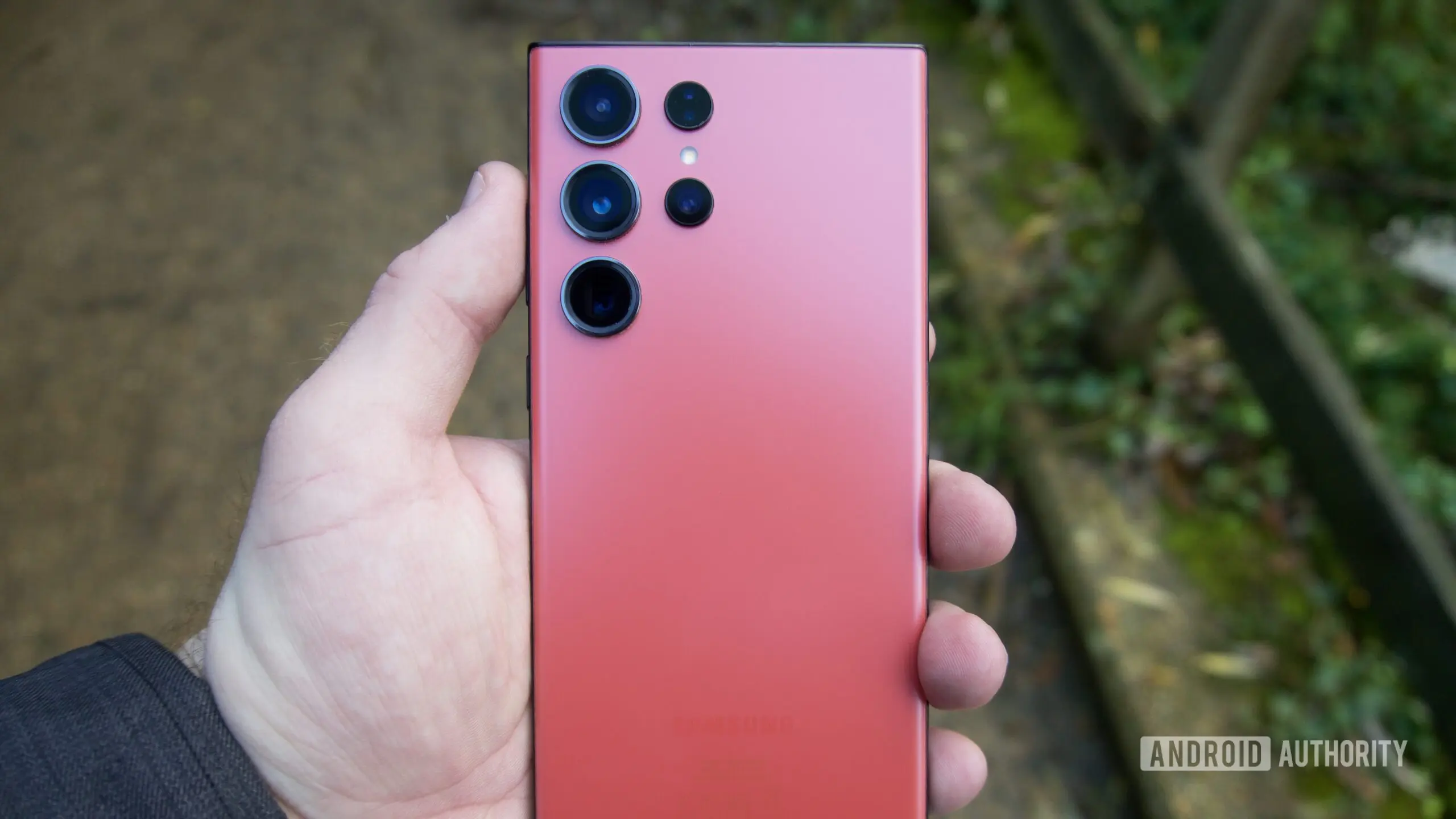
Samsung recently began rolling out the stable One UI 8.5 update to its older flagship devices, including the Galaxy S23 series. The update brings a host of improvements: a more customizable Quick Settings menu, enhanced lock screen personalization, visually cohesive system menus, and new Galaxy AI features. However, one key feature that Samsung has introduced for its top-tier devices—the ability to share files with Apple devices via AirDrop—is conspicuously absent from the Galaxy S23 series. This omission has ignited a wave of frustration among Galaxy S23 owners, many of whom believe their hardware is perfectly capable of supporting the feature.
The controversy centers on Apple's Wireless Direct Link (AWDL) protocol, which powers AirDrop. AWDL requires Wi-Fi radios on both sender and receiver devices to quickly switch channels hundreds or thousands of times per second, enabling peer-to-peer transfers without disconnecting from the internet. Users argue that the Snapdragon 8 Gen 2 chipset inside the Galaxy S23, paired with Qualcomm's FastConnect 7800 system, is fully capable of handling these demands. The FastConnect 7800 supports Wi-Fi 7, the latest standard, and includes advanced channel switching capabilities. Yet, Samsung has chosen to exclude the Galaxy S23 from the list of devices that receive AirDrop compatibility, even though the Galaxy S24, S25, and S26 series are included.
Many users have taken to online forums, including Reddit, to express their dissatisfaction. Redditor Big-Salary9046 has been particularly vocal, accusing Samsung of engaging in planned obsolescence—a practice where manufacturers intentionally limit features on older devices to encourage upgrades. The Redditor provided a detailed technical breakdown, explaining that the Snapdragon 8 Gen 2's Wi-Fi module is more than sufficient for AWDL. While we cannot independently verify all these claims, the reasoning appears sound. The primary bottleneck is typically the Wi-Fi radio's ability to handle rapid channel switching, and the FastConnect 7800 is designed precisely for such tasks.
So why is Samsung leaving the Galaxy S23 out? The most plausible explanation involves the resources required to bring AirDrop compatibility to older devices. Google and Samsung must work with multiple chip vendors to tune and test the feature on each specific hardware combination. For the Galaxy S23, this would mean additional engineering effort for a device that is already two years old and has only one major software update left. Given the cost and complexity, Samsung may have decided to focus its resources on newer models. However, this rationale offers little comfort to users who expected their premium phones to receive all the benefits of the latest update.
The frustration is compounded by the fact that Google and Samsung have already established a broader partnership for cross-platform file sharing. Last year, Google introduced a feature on Pixel phones that enabled AirDrop-like transfers with Apple devices, and Samsung quickly adopted it for its high-end models. But the Galaxy S23, despite being a flagship phone with excellent hardware, has been excluded. This has led to a sense of betrayal among owners who feel that Samsung is artificially segmenting its ecosystem to drive sales of the Galaxy S24 and newer devices.
A poll conducted within the article reveals mixed opinions among readers. When asked, “Do you care about AirDrop compatibility on your Galaxy device?” 28% responded “Yes, I want it bad,” another 28% said “No, I don't use AirDrop,” and the largest group (44%) admitted “It would be nice to have, but it's not a dealbreaker.” This suggests that while the feature is not a must-have for everyone, a significant minority is deeply unhappy. For those who rely on seamless file sharing with Apple users, the lack of official support is a major inconvenience.
Historically, Samsung has been known for its aggressive update policy, offering up to four years of major OS updates for many flagships. The Galaxy S23 series is scheduled to receive Android 17 and One UI 9, meaning it still has at least one major software update ahead. However, the company has been less consistent in backporting cutting-edge features like AirDrop compatibility. This selective approach fuels accusations that Samsung is prioritizing profit over user experience.
Fortunately, there are workarounds for those who depend on AirDrop. The first is Samsung and Google’s own Quick Share system, which now supports cross-platform transfers via QR codes. Announced at Google I/O 2026, this feature allows Android users to share files with Apple devices by scanning a QR code—a process that is reliable and easy to use. The article tested this feature and confirmed it works flawlessly. Another option is to use a third-party app like NearDrop, though it is currently limited to platforms such as macOS. These alternatives may not be as seamless as native AirDrop, but they provide viable solutions for users who frequently share files between their Galaxy S23 and Apple devices.
From a technical standpoint, the decision to exclude the Galaxy S23 is puzzling. The Snapdragon 8 Gen 2 is a powerful chipset that natively supports the FastConnect 7800, which is identical to the Wi-Fi subsystem found in the Galaxy S24 (Snapdragon 8 Gen 3 also uses a similar FastConnect module). The AWDL protocol does not require significant CPU overhead—it primarily relies on the Wi-Fi hardware. So why would Samsung not enable it? One possibility is that the feature relies on specific firmware or driver support that only Qualcomm and Samsung can co-develop. If Samsung did not include the necessary drivers in the One UI 8.5 build for the Galaxy S23, it would be a deliberate omission.
Another angle is the relationship between Google and Samsung. Google first introduced AirDrop compatibility on Pixel phones, and later Samsung joined the effort for its own devices. However, the implementation may require specific tuning for each device generation. For the Galaxy S23, Google and Samsung may have decided that the engineering cost outweighed the benefit, especially since the phone is approaching the end of its major update cycle. This decision, while pragmatic, disregards the emotional investment of users who paid a premium for a flagship phone just two years ago.
In the broader context of the smartphone industry, the lack of AirDrop compatibility on the Galaxy S23 is a small but telling example of how manufacturers handle feature parity across generations. Apple, for instance, ensures that AirDrop works on all compatible devices running iOS 7 or later, regardless of age. Samsung and Google have not yet adopted such a consistent policy for cross-platform features. As the lines between ecosystems continue to blur, users expect their devices to remain relevant longer. This incident may push Samsung to reconsider its strategy for future updates.
We have reached out to Samsung for official comment on why the Galaxy S23 series was excluded from AirDrop support. We will update this article when we receive a response. In the meantime, Galaxy S23 owners can explore the Quick Share QR code method or third-party apps to bridge the gap. While these solutions are not perfect, they offer a lifeline to those who need to share files with Apple devices without relying on cloud services or email attachments.
Source: Android Authority News