

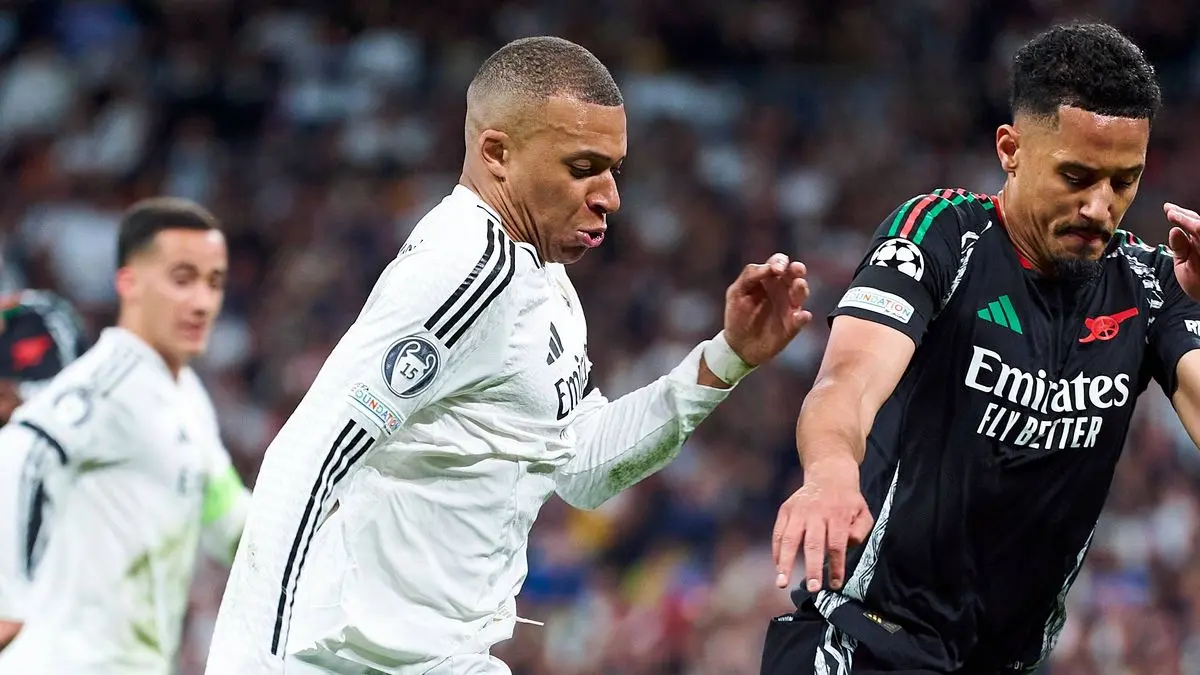
The summer of 2016 remains a pivotal moment in Arsenal’s modern history. Arsène Wenger, then the club's long-serving manager, made an unprecedented trip to the Parisian suburb of Bondy to meet a teenage phenomenon. Kylian Mbappe, fresh off a 26-goal breakthrough season at Monaco, was the most coveted young talent in world football. Wenger sat in the family home, laid out his vision, and tried to convince the boy who grew up idolising Thierry Henry to choose Arsenal over the financial might of Europe's elite. It almost worked. Mbappe later admitted he was “very close” to joining the Gunners, but in the end, the pull of a world-record move to Paris Saint-Germain proved too strong. For nearly a decade, Arsenal fans have wondered what might have been.
The Mbappe Allure: A Dream Rooted in Henry's Legacy
Part of Mbappe’s lasting appeal to Arsenal supporters is the irresistible parallel with Thierry Henry. Both Frenchmen emerged from the Clairfontaine academy, both possessed blistering pace and exquisite technique, and both won the World Cup at a young age. Mbappe himself has frequently spoken of watching “everything Henry did” and a famous photograph shows the young star wearing Arsenal's 2003/04 yellow shirt with Henry's name and number 14 on the back. That image became a symbol of hope for fans who dreamed that the next Henry would finally arrive at the Emirates. Yet for all the romanticism, the reality of Mbappe’s career trajectory has been far more complicated.
The Wenger Pursuit and What Followed
Arsène Wenger’s attempt to sign Mbappe in 2016 is now the stuff of Arsenal folklore. The French manager, known for his ability to spot young talent, identified the 17-year-old as the future of the club. Monaco initially resisted, and after another stunning season that saw Mbappe help the side reach the Champions League semi-finals, the bidding war intensified. PSG secured his signature in 2017 for an initial loan that became a €180 million permanent transfer. Arsenal simply could not compete with that kind of financial power. Over the next six years, Mbappe shattered Ligue 1 records, became PSG’s all-time top scorer, and led France to a World Cup final in 2022. But the Champions League title that both he and PSG craved remained elusive.
The PSG Era: Individual Brilliance, Collective Disappointment
Mbappe’s time at PSG was characterised by staggering individual numbers but a persistent failure to conquer Europe. The Parisian club, built around superstars like Neymar and Lionel Messi, never developed the team cohesion required to win the Champions League. Mbappe’s status as the focal point often came at the expense of tactical balance. When he left for Real Madrid as a free agent in 2024, PSG finally won the Champions League in 2025 under Luis Enrique — without him. That irony has not been lost on observers. It fed a growing narrative that the French captain, for all his talent, might be a player who elevates his own statistics while diminishing the collective.
Real Madrid's Turmoil and the 'Mbappe Out' Petition
Mbappe’s move to his ‘dream club’ Real Madrid was supposed to be the crowning achievement of his career. Instead, it has become a cautionary tale. His debut season at the Bernabéu saw him break the record for most goals by a player in his first year at the club, but Real Madrid finished without any major silverware. The second season has been even worse. A public falling-out with manager Álvaro Arbeloa over his role in the team, an injury at a critical moment, and reports of dressing-room discord have turned the Madrid squad into a toxic environment. In April 2026, an online petition calling for Mbappe’s exit amassed over 70 million signatures. When he returned from injury against Real Oviedo, the home fans booed him. The dream has soured dramatically.
Arsenal's Transformation Under Arteta
While Mbappe’s star has dimmed in Madrid, Arsenal have undergone a remarkable transformation under Mikel Arteta. The Spaniard has rebuilt the club around principles of collective effort, tactical discipline, and relentless work rate. No individual is bigger than the team. This philosophy has propelled Arsenal to the top of the Premier League table and into the Champions League final. Central to this success is a striker who cost £64 million in the summer of 2025: Viktor Gyokeres. The Swedish international arrived from Sporting CP with a reputation for tireless pressing and selfless play, but he faced early criticism for his finishing. Unlike the pampered superstar elsewhere, Gyokeres never complained. He kept working, kept pressing, and has transformed into a decisive forward.
Viktor Gyokeres: The Anti-Mbappe
Gyokeres embodies everything Arteta demands. He puts his body on the line in every challenge, chases lost causes, and links play fluidly with his teammates. Over the past two months, he has registered five goal involvements in six Premier League matches, scoring vital goals that have kept Arsenal’s title hopes alive. The contrast with Mbappe could not be starker. Where Mbappe’s ego has destabilised two of the world’s biggest clubs, Gyokeres has quietly integrated into a system that values the collective over the individual. He is not as naturally talented as the Frenchman — few are — but he makes the team better. That is precisely what Arteta needed.
Why Arsenal No Longer Need the Dream
There have been whispers that Mbappe could be available this summer, perhaps on a cut-price deal or even a loan. But Arsenal would be wise to steer clear. Bringing Mbappe into a squad that has finally achieved harmony would risk unravelling everything Arteta has built. The Frenchman’s influence in the dressing room, his need to be the undisputed star, and his history of clashing with managers would be a poor fit for a club that has thrived on unity. Gyokeres may not sell shirts or generate headlines in the same way, but he scores goals, defends from the front, and plays for the badge. That has become priceless at the Emirates.
The Broader Lessons for Football
Mbappe’s decline from generational talent to divisive figure offers a cautionary tale for modern football. Raw ability alone is not enough to build a successful team. The game’s greatest sides — from Guardiola’s Barcelona to Klopp’s Liverpool and now Arteta’s Arsenal — prove that cohesion, work ethic, and tactical intelligence matter more than individual brilliance. Mbappe’s legacy is not yet written; he is only 27 and could still adapt. But if Arsenal fans once dreamed of what it would be like to have him lead their line, they can now see clearly that the reality would have been very different. The boy who wore Henry’s shirt might have been the perfect signing in 2016, but in 2026, the Gunners have outgrown that dream. They no longer need Kylian Mbappe. They have Viktor Gyokeres — and that is enough.
Source: Daily Mirror News