

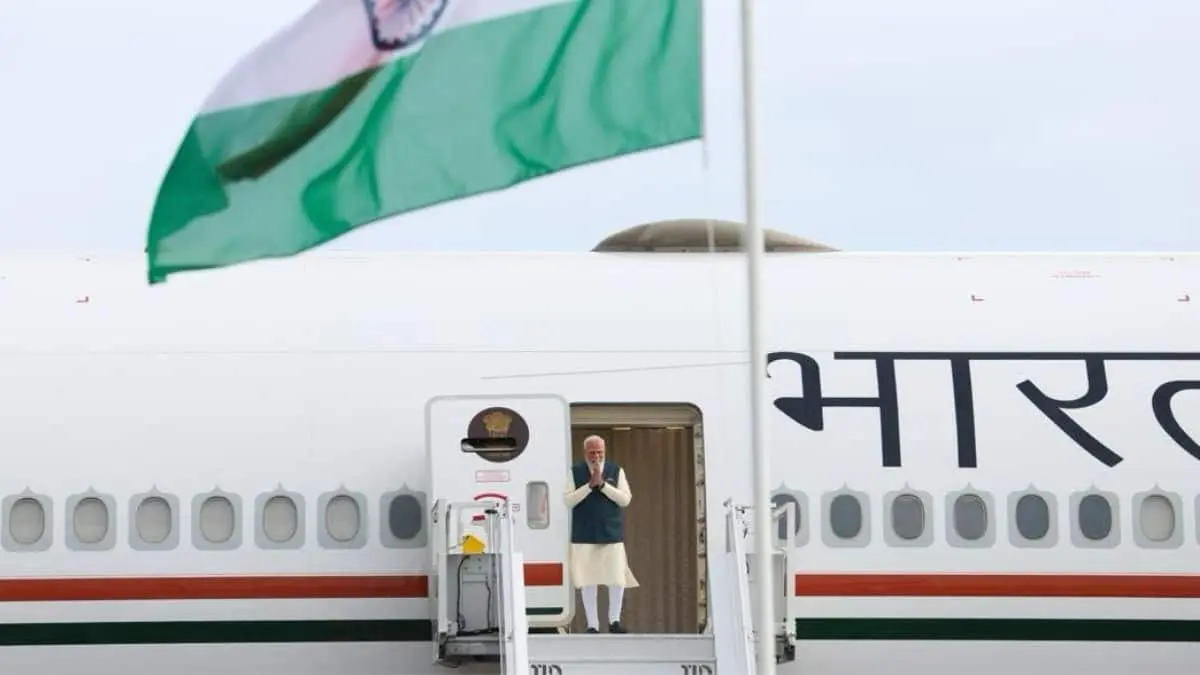
Introduction: A Strategic European Outreach
Prime Minister Narendra Modi embarked on a five-nation European tour in May 2026, covering the Netherlands, Sweden, Norway, Italy, and an additional stop. The visit comes at a critical juncture when India is repositioning itself as a global manufacturing hub and a key player in the Indo-Pacific. By engaging with these four distinct European economies, New Delhi aims to deepen cooperation in trade, technology, defense, and climate action. Each nation offers unique opportunities that align with India's domestic priorities, such as 'Make in India', digital transformation, and the transition to green energy. The trip also sends a strong signal of India's commitment to multilateralism and its desire to diversify partnerships beyond traditional allies.
Netherlands: Logistics, Water Management, and High-Tech Agriculture
The Netherlands is India's third-largest trading partner within the European Union, with bilateral trade exceeding $15 billion annually. The visit focused on expanding collaboration in water management, a sector where the Dutch are world leaders. India, facing recurring water stress in many states, can benefit from Dutch expertise in flood control, irrigation efficiency, and wastewater treatment. Several agreements are expected to be signed on river rejuvenation projects and urban water supply systems.
Another major area is high-tech agriculture. The Netherlands is the second-largest exporter of agricultural products globally, despite its small size. Indian farmers can adopt Dutch precision farming techniques, greenhouse technology, and cold chain logistics to reduce post-harvest losses. Partnerships between Indian agri-tech startups and Dutch research institutes were announced during the visit.
Furthermore, the port of Rotterdam remains a critical gateway for Indian goods entering Europe. Discussions are underway to enhance digital connectivity and streamline customs procedures. The two countries also agreed to boost cooperation in the semiconductor sector, with Dutch companies like ASML potentially investing in India's chip fabrication ecosystem.
Sweden: Innovation, Sustainability, and Defense Collaboration
Sweden is known for its innovation ecosystem, and India seeks to harness it for its startup revolution. During the visit, a new India-Sweden Innovation Partnership was launched, focusing on clean technologies, digital health, and smart cities. Swedish companies such as Ericsson, Volvo, and IKEA already have a strong presence in India, and the visit paved the way for increased investments in electric mobility and circular economy projects.
Defense cooperation was a key highlight. Sweden is home to Saab, which manufactures the Gripen fighter jet and other advanced defense systems. India is exploring joint production of military equipment under the 'Make in India' initiative, particularly in the areas of naval systems and aerospace. The two sides signed a Memorandum of Understanding on defense research and development, enabling knowledge sharing in stealth technology and cybersecurity.
Sweden's leadership in sustainability also aligns with India's ambitious renewable energy targets. Swedish firms are collaborating with Indian state governments to set up large-scale solar parks and waste-to-energy plants. The visit reinforced the shared commitment to the Paris Agreement and the need for affordable climate financing.
Norway: Maritime Cooperation, Blue Economy, and Energy Transition
Norway, with its extensive coastline and advanced maritime industry, is a natural partner for India's blue economy ambitions. The visit saw the signing of a Joint Action Plan on Ocean Economy, covering sustainable fisheries, marine biotechnology, and deep-sea mining. India is keen to leverage Norwegian expertise in shipbuilding and port modernization to boost its own coastal infrastructure.
Energy transition is another pillar of the bilateral relationship. Norway has vast experience in hydropower and offshore wind energy. Indian companies are looking to partner with Norwegian firms to develop offshore wind projects in the Gulf of Khambhat and the Bay of Bengal. Agreements were also signed on carbon capture and storage (CCS) technologies, which can help India decarbonize its heavy industries.
Additionally, Norway is a key player in the Arctic Council. India, an observer state, seeks Norwegian support for its polar research and climate monitoring programs. The two countries agreed to collaborate on satellite-based observation of the polar regions, which is vital for understanding global climate patterns.
Italy: Infrastructure, Manufacturing, and Cultural Exchange
Italy, as the fourth-largest economy in the European Union, presents numerous opportunities for India. The visit emphasized strengthening the strategic partnership in infrastructure development. Italian companies have a strong track record in high-speed rail, tunneling, and metro construction. With India undertaking massive railway modernization projects, Italian expertise is being sought for the Mumbai-Ahmedabad bullet train corridor and other urban transit systems.
Manufacturing cooperation is also expanding. Italy is known for its design and engineering in the automotive, aerospace, and luxury goods sectors. Several Italian brands are considering setting up manufacturing units in India to serve both the local market and export to Asia. The two sides signed an agreement on industrial parks, modeled after the Gujarat International Finance Tec-City (GIFT), to invite Italian small and medium enterprises.
Cultural and educational exchanges were also prioritized. Italy hosts a significant Indian diaspora, and the visit included a community event in Rome. New scholarships were announced for Indian students to study Italian design and fashion. Additionally, both countries pledged to work together on preserving cultural heritage, with Italian experts assisting in the conservation of Indian monuments.
Overall Strategic Significance
PM Modi's Europe visit reflects India's recognition that Europe remains an indispensable partner in technology, investment, and global governance. While China and the United States dominate headlines, Europe's collective economic heft and innovation capacity are crucial for India's growth. The visit also comes at a time when the European Union is reassessing its trade policies and seeking reliable partners in Asia. India, with its large market and stable democracy, fits the bill.
The agreements signed during the tour are expected to generate thousands of jobs in India, particularly in manufacturing and renewable energy. They also pave the way for technology transfers that can upgrade Indian industry. On the geopolitical front, these nations have aligned with India on issues like counter-terrorism and maritime security, as seen in the joint statements condemning cross-border terrorism.
Moreover, the visit strengthens India's credentials as a global player that can engage with different worldviews. The Netherlands, Sweden, Norway, and Italy may not always be in the headlines, but their influence in the EU and beyond is significant. By building deeper bilateral ties with each, India is strategically diversifying its relationships and reducing overdependence on any single country.
Looking Ahead: Implementation and Follow-Up
The true test of the visit will be in the implementation of the signed MoUs and action plans. Bilateral mechanisms, such as the Joint Economic Commissions and Foreign Office Consultations, will track progress. India has also proposed annual summits with each of these nations to review and accelerate cooperation. The first such summits are likely to be held in early 2027. With a clear roadmap and political will, the gains from Modi's Europe visit could prove transformative for India's economic and strategic trajectory.
Source: Firstpost News