

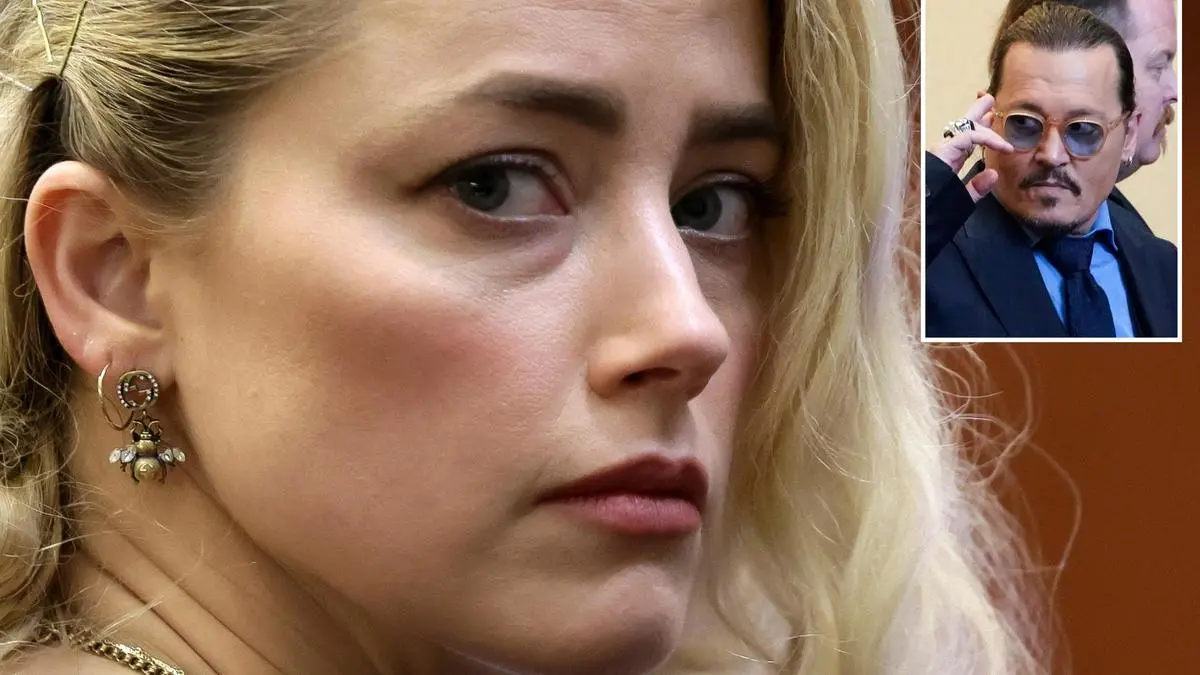
As Johnny Depp celebrates his victory in the defamation case against Amber Heard, new details have emerged about damning evidence that the jury never saw during the high-profile trial. The case, which captivated global audiences, ended on June 1, 2022, with the jury finding in favor of Depp on all three statements in Heard's 2018 Washington Post op-ed, awarding him $15 million in damages, later reduced to $10.35 million due to Virginia state caps. Yet behind the courtroom drama, a trove of evidence was barred from jurors—photos, audio files, text messages, letters, and testimony that do not support many of Heard's claims against the actor.
The missing evidence, spanning from 2013 to 2016, includes audio recordings, text exchanges, and sworn declarations that contradict Heard's narrative of abuse. Legal experts say the exclusions were based on standard evidentiary rules, such as hearsay or the death of a key witness, but their absence raises questions about what the jury might have concluded had they seen it all. This article delves into each piece of excluded evidence, its content, and its potential impact on the trial.
1. Audio from Australia: The Bottle Incident
The jury never heard a crucial audio recording that documents the aftermath of a violent incident in Australia in March 2015, during which Depp suffered a severed fingertip. In court, Heard testified that she did not throw a vodka bottle at Depp, claiming he injured himself by hitting a wall. However, an audio file shared on YouTube captures Heard admitting, "I never meant to hurt him" and "I didn't do it on purpose." In the same recording, Depp's head of security, Jerry Judge, says: "And she—she admits to me she threw the first one—she threw a bottle at him. She did it first." The audio was ruled inadmissible because Judge died in 2019, making his statements hearsay under Virginia law. Without this evidence, the jury heard only Heard's version and Depp's counterclaims, leaving the incident's true nature ambiguous.
The Australia episode was a pivotal point in the trial, often cited by Depp's legal team as an example of Heard's violent behavior. Depp testified that Heard threw a vodka bottle at him, severing his finger, and that he later underwent surgery. Heard claimed Depp was intoxicated and aggressive, and she threw a bottle in self-defense. The excluded audio would have provided a contemporaneous account from security personnel, supporting Depp's version. Experts note that the jury's focus on Heard's credibility might have shifted had they heard Judge's admission.
2. Texts to Heard’s Mother: “He has never hit me”
A series of text messages between Heard and her late mother, Paige Parsons, sent in 2013, were never shown to the US jury. In these messages, Heard describes Depp as "like Dr Jekyll and Mr Hyde" but explicitly states, "He is not being violent to me. He is just raging in general." Another text reads, "Dealing with Johnny’s spiral. It’s terrible mom. I don’t know what to do," and adds, "Violent and crazy. I am heartbroken that THIS is who I love." While the texts reference his erratic behavior and substance abuse, they deny physical violence. Heard later testified in the UK trial that she had lied to her mother about the abuse to prevent her father from finding out. The texts were introduced in Depp's failed libel case against The Sun's publisher, NGN, but excluded in Virginia. Their absence meant the jury never saw Heard's own words downplaying physical violence a year into their relationship.
Legal analysts say the texts might have supported Depp's argument that Heard was the aggressor and that her accusations were retaliatory. The exclusion could be due to hearsay issues or because the UK trial did not bind the US case. Nonetheless, the texts offer a direct window into Heard's contemporaneous state of mind, contradicting her later claims of early abuse.
3. Jennifer Howell’s “Staircase” Letter
Jennifer Howell, a former friend of Heard's sister Whitney Henriquez, penned a declaration that directly contradicts Whitney's testimony. Whitney had testified about a March 2015 staircase incident in which she claimed Depp hit both her and Heard. But Howell's declaration states: "Whitney told me she tried to stop her sister Amber from hitting and attacking Johnny on the stairs." Howell also refuted Whitney's claim that she slept on the floor after the incident, saying she stayed in the guest room of Howell's apartment. Although Howell was allowed to testify via deposition, the court heavily edited her testimony, and many of her claims were not heard by jurors. The reason cited was likely hearsay objections from Heard's legal team, as Whitney's statements reported to Howell were not firsthand.
The staircase incident was a key piece of Heard's testimony, supported by her sister, but the declaration from Howell would have cast serious doubt on its accuracy. The jury's limited exposure to Howell's account meant they could not weigh her credibility against Whitney's. This exclusion potentially weakened Depp's defense, as Whitney's testimony was one of the few direct witness accounts of alleged abuse.
4. Additional Excluded Evidence: Photos, Audio, and Letters
Beyond these three items, reports indicate that at least two other pieces of evidence were barred: photographs of Heard's injuries that Depp's team argued were inconsistent with her claims, and additional audio recordings that captured Heard's admissions of hitting Depp. One key audio snippet, played outside court, features Heard saying, "I'm sorry I didn't hit you—I was hitting you, I was not punching you." This audio was ruled inadmissible because it was recorded without Heard's consent (Virginia is a one-party consent state, but the recording might have been challenged on other grounds). The photos, which Heard's team claimed showed bruising, were challenged as unrelated to the specific incidents.
The cumulative effect of these exclusions is a trial record that arguably favored Heard's narrative. Jurors were left with only a portion of the available evidence, which Depp's supporters argue tipped the scales. However, jury decisions are final, and the trial's verdict reflects the evidence they were allowed to see. The missing pieces now fuel ongoing public debate about the fairness of the trial and the legal system's handling of domestic violence cases.
Background and Context of the Trial
The defamation trial arose from Heard's 2018 op-ed in which she described herself as a "public figure representing domestic abuse." Though Depp was not named, his lawyers argued the article implicitly referred to him and harmed his career. Heard countersued for $100 million, claiming Depp's lawyer had portrayed her allegations as a hoax. The trial lasted six weeks, with testimony from both actors, experts, and witnesses. The jury deliberated for about 13 hours before reaching a verdict.
The case drew enormous attention, with millions following live streams and social media commentary. Depp's fans celebrated the verdict, while Heard's supporters expressed dismay. The excluded evidence now adds a layer of complexity, suggesting that the legal system's rules—designed to ensure fairness—may have inadvertently prevented the full truth from emerging.
Experts note that evidentiary rulings are routine in trials, and both sides had evidence excluded. Depp's team also saw some evidence barred, such as portions of Heard's therapy records. But the items listed here tend to favor Depp's side, fueling perceptions that the jury was deprived of crucial context. Whether this would have changed the outcome is impossible to know, but the revelations have reignited discussions about the op-ed's impact and the power of celebrity trials.
Implications for Defamation Law and Public Perception
The verdict has broader implications for free speech and defamation. Heard faced a high bar as a public figure, needing to prove actual malice. The jury found that her statements were false and made with reckless disregard for the truth. The excluded evidence, if introduced, might have strengthened that conclusion. However, Heard's legal team could have argued that the exclusion was proper and that the evidence was unreliable.
Public opinion remains divided. Many observers feel the trial served as a referendum on MeToo, with Depp's victory seen as a setback for domestic violence victims. Others argue it exposed false accusations and the misuse of the movement. The missing evidence complicates the narrative: if the jury had heard Heard's own texts denying violence, they might have been more convinced of Depp's innocence. Conversely, some evidence might have been excluded precisely because it was prejudicial or lacked foundation.
As the dust settles, both actors are moving on. Depp has resumed his music career and film projects, while Heard has appealed the verdict. The case remains a landmark in defamation law, and the excluded evidence continues to be a topic of discussion in legal circles and online forums. The full transcript of the trial, along with the missing pieces, will likely be studied for years to come.
In the end, the jury's decision stands. But for those seeking a complete picture, the evidence they never saw offers a tantalizing glimpse into what might have been. The audio, texts, and letters reveal a relationship far more complex and nuanced than the courtroom presentations suggested, reminding us that justice often depends on what is shown—and what is hidden.
Source: 7NEWS News