

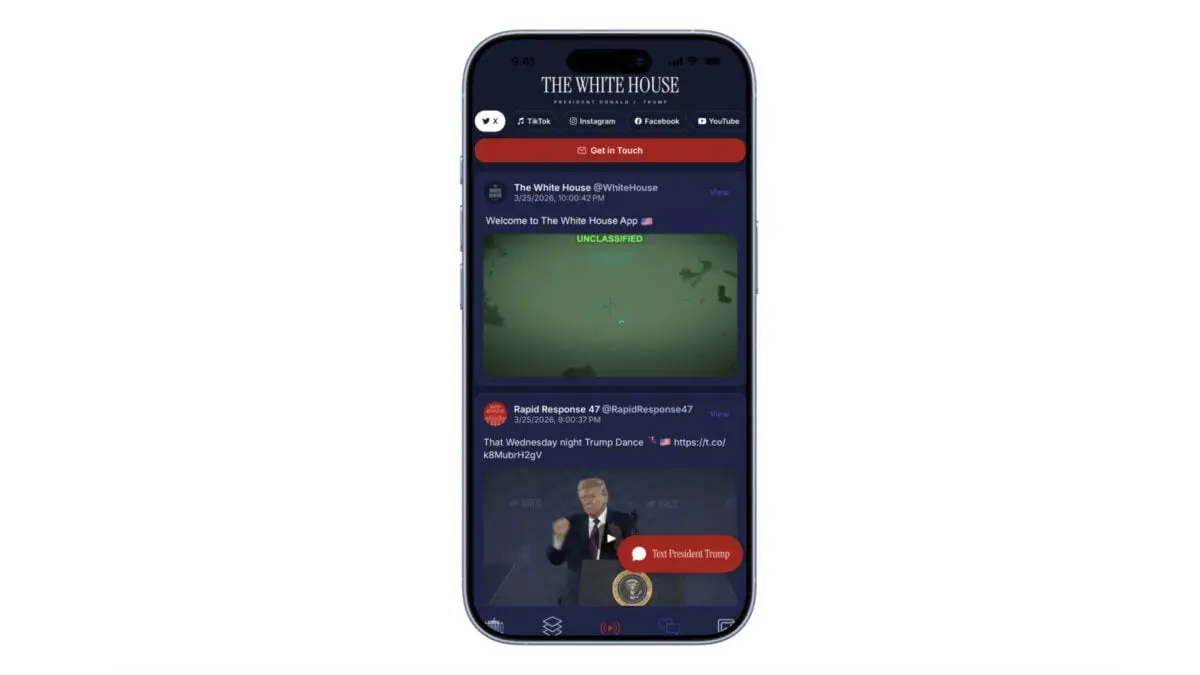
If you work for the Department of Homeland Security, your work phone is about to get a new piece of software whether you want it or not. The White House app, released in March of this year, is now being automatically installed on all DHS-issued mobile devices, according to a Tuesday email obtained by Politico. The email describes the app as a convenient way to access official White House communications, including announcements, executive actions, speeches, livestreams, videos, and other updates. But the auto-install has drawn sharp criticism from cybersecurity experts and privacy advocates who worry the app could be used to siphon sensitive data off government networks or create a backdoor for unauthorized access.
The App's Features and Promises
The White House touts the app as providing unfiltered, real-time updates straight from the source—source being President Donald Trump. In a press release on the White House website, the first listed feature is breaking news alerts on major announcements, executive actions, and other key priorities. Other features include video streaming, a library of archived sound bites from Trump, the ability to stay connected with new policies, and an option to send feedback, including by voice. The official illustration for the app shows a post with text, That Wednesday night Trump dance, accompanied by emoji, which some critics have argued trivializes the presidential office.
This is not the first White House mobile application. President Barack Obama released a White House app in 2010, during the early heyday of the app store craze. That app also offered news and updates, but it was not forced onto government devices. The 2010 version has been criticized for being clunky and limited, but it lacked the aggressive auto-install tactics now being employed. The current administration's approach has been compared to the infamous automatic download of U2's album Songs of Innocence onto all iPhones in 2014, except instead of delivering music, this app delivers political content directly to the work phones of federal employees.
Data Sharing and Privacy Concerns
One of the most alarming aspects of the White House app, according to privacy researchers, is its data collection and sharing practices. A report from Notus.org revealed that the app shares user data—including time zone, IP address, device identifiers, and possibly location—with third-party services. The app, according to Notus, does not disclose its data sharing the way most others do, meaning users may be unaware of exactly who receives their information. For federal employees, who are already subject to high levels of surveillance, this additional data sharing could compromise their privacy and potentially expose sensitive work patterns.
Security experts have noted that any app installed on a government-issued device can introduce vulnerabilities. Sonny Hashmi, a former IT executive for the General Services Administration (GSA), told Government Executive that auto-installs of the app are cause for alarm. He stated, Any app that is installed on government issued devices can potentially create backdoor access to government networks behind the firewall. This is particularly concerning for DHS, which oversees border security, immigration enforcement, and cybersecurity. A compromised DHS device could become a vector for espionage or data theft.
The administration has defended the app as a tool for transparency and direct communication with the American people. A White House spokesperson said the app provides unfiltered updates and is completely voluntary for the general public. However, for DHS employees, it is no longer voluntary—the app is forced onto their devices, and they cannot remove it without violating policy. This has led to a growing chorus of criticism from civil liberties groups, who argue that mandatory installation of a political app on government devices blurs the line between official business and campaign propaganda.
Comparison with Earlier White House Apps and Federal Policy
The Obama-era White House app, released in 2010, was primarily a content delivery tool that aggregated news, blog posts, and videos from the White House website. It did not include features like real-time breaking alerts or voice feedback, nor did it have the same level of data collection. It was also never forced onto government devices. The current app's aggressive rollout is part of a broader trend within the Trump administration, which has sought to centralize communication through its own platforms, including social media and the White House website.
Last month, according to Government Executive, the Trump administration told federal agencies to start installing the app on phones. The FAA was already slated to receive the app as an auto-download. Now DHS is following suit, and other agencies may soon receive the same mandate. The speed and scope of the rollout have raised questions about whether proper security reviews were conducted. Typically, federal agencies require rigorous testing of any software installed on government devices, especially those that connect to internal networks. Critics say the White House app may have bypassed normal vetting procedures.
In addition to security risks, there are legal concerns. The Hatch Act, which prohibits federal employees from engaging in political activity while on duty, could be implicated if the app is used to promote the president's political agenda. Although the app is billed as a source of official White House communications, its content often includes messaging that is indistinguishable from campaign rhetoric. A former White House ethics official noted that forcing the app onto devices could be seen as coercive, potentially violating laws that protect federal employees from being compelled to engage in political activities.
Historical Context and Broader Implications
The forced installation of apps on work devices is not new in the private sector, but it is unusual in the federal government. Companies frequently push mandatory software updates on employee phones, but those updates are typically security patches or productivity tools. The White House app is unique in that it is a political communication tool. This raises questions about the boundaries of acceptable use of government property and the extent to which an administration can use the federal workforce as a captive audience.
Previously, there have been instances of government employees being required to install apps related to official duties, such as emergency alert systems or secure messaging apps. However, those apps are typically neutral and not associated with a particular political figure. The White House app is explicitly tied to Trump and his administration, making it a partisan tool. Some experts argue that requiring DHS employees to install it violates their First Amendment rights, as they are forced to house political speech on their devices.
The DHS itself has a complicated relationship with mobile device security. The department has been at the forefront of developing security protocols for smartphones and tablets, given its role in protecting the nation's borders and networks. The auto-install of an unvetted app could undermine these efforts. In the past, DHS has warned against using apps that collect excessive data. Now it is requiring its own workforce to use one.
As the rollout continues, the administration has shown no signs of backing down. The White House says the app is a vital tool for keeping the public informed. But for the thousands of DHS employees who will soon find the app on their work phones, the bigger question may be whether their device is now a surveillance tool for the White House or a genuine channel for transparency.
Source: Gizmodo News