

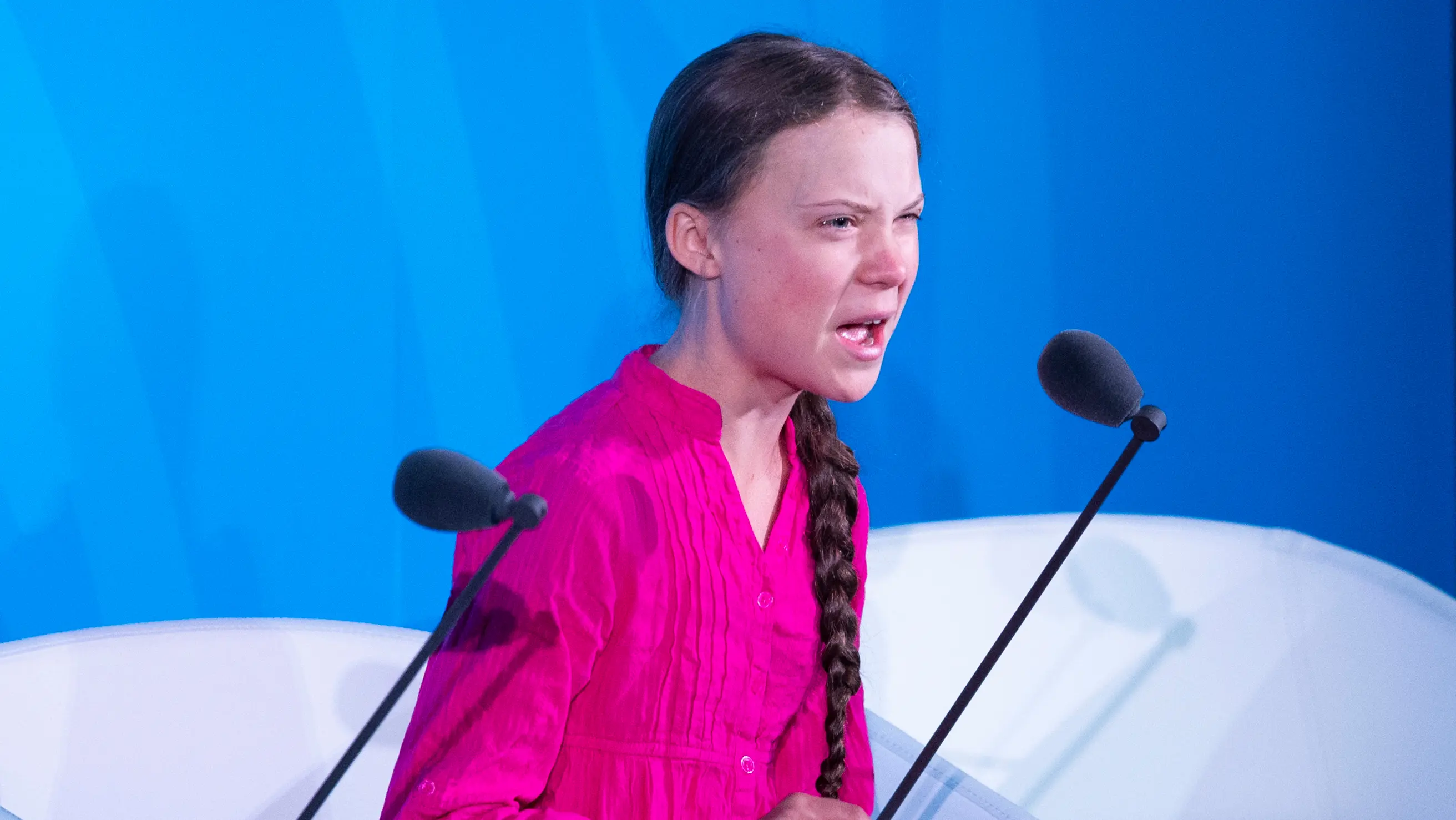
Greta Thunberg's Powerful Address to World Leaders
On September 23, 2019, a 16-year-old Swedish student named Greta Thunberg stood before the United Nations General Assembly in New York City. Her voice cracked with emotion as she told the world's most powerful leaders: 'You have stolen my dreams and my childhood with your empty words.' The speech, delivered at the UN Climate Action Summit, quickly became a defining moment in the global climate movement.
Thunberg's appearance came as representatives from some 60 countries gathered for what the UN billed as a 'climate emergency' summit. The meeting aimed to reinvigorate the 2015 Paris Agreement, which had already started to falter as nations struggled to meet their emissions reduction pledges. At that time, mankind was releasing more greenhouse gases into the atmosphere than at any previous point in history — a stark reminder of the gap between political promises and real-world action.
The Context of Thunberg's Anger
By 2019, Thunberg had become the face of a global youth-led climate movement. She began her activism in August 2018, when she skipped school to sit outside the Swedish parliament with a sign reading 'Skolstrejk för klimatet' (School Strike for Climate). Her solitary protest inspired millions of students worldwide to join the Fridays for Future strikes, demanding that governments treat climate change as an urgent crisis.
In her UN speech, Thunberg did not mince words. She pointed out that the world's leaders were still focusing on economic growth and 'fairy tales of eternal economic growth' while ignoring the science. 'You say you hear us and that you understand the urgency,' she said. 'But no matter how sad and angry I am, I do not want to believe that because if you really understood the situation and still kept on failing, you would be evil.'
Summit Outcomes and Ongoing Challenges
While the summit produced promises from several countries to step up their climate ambitions, many activists — not just Thunberg — viewed these as insufficient. The United Nations Secretary-General António Guterres had called on nations to come with concrete plans, not just rhetoric. However, major emitters like the United States (under President Donald Trump) and Brazil stood apart, with Trump appearing briefly and then leaving to meet with other leaders, and Brazil's Jair Bolsonaro refusing to commit to stronger action.
The gap between what is required and what is proposed remains vast. According to the Intergovernmental Panel on Climate Change (IPCC), global carbon dioxide emissions must peak by 2025 and drop sharply to keep warming below 1.5°C. Yet emissions continued to rise through 2019, driven by coal, oil, and gas consumption in the developing and developed world alike.
Thunberg's Influence and the Rise of Youth Activism
Thunberg's bluntness resonated with millions who saw her as a truth-teller. Her speech at the UN was one of several high-profile moments — including a transatlantic sailing voyage to attend the summit (to avoid aviation emissions) and her 'How dare you' address earlier in 2019 at the World Economic Forum in Davos. She also popularized the concept of 'flight shaming' and encouraged young people to hold their governments accountable.
Youth-led organizations like the Sunrise Movement, Extinction Rebellion (though founded before her), and Fridays for Future drew energy from her example. By the end of 2019, the group had organized global strikes involving an estimated 6 million people across 185 countries. Thunberg was also named Time magazine's Person of the Year in 2019, the youngest ever.
Scientific Background: The Urgency of Action
The UN summit took place against a backdrop of disturbing scientific findings. A special report from the IPCC released in 2018 warned that the world had only 12 years to limit warming to 1.5°C. By 2019, extreme weather events — from heatwaves in Europe to wildfires in the Amazon and Australia — were becoming more frequent and intense. Scientists also highlighted feedback loops, such as melting permafrost releasing methane, that could accelerate warming beyond human control.
Thunberg's remarks encapsulated the frustration of a generation facing an uncertain future. 'We are in the beginning of a mass extinction, and all you can talk about is money and fairy tales of eternal economic growth,' she said. Her words were aimed at the fundamental disconnect between the pace of political decision-making and the speed of ecological collapse.
Reactions and Legacy
Global reaction to Thunberg's speech was mixed. Many applauded her courage and clarity, while others, particularly political conservatives and fossil fuel interests, mocked or attacked her. Then-President Trump tweeted sarcastically about her, and some media outlets tried to dismiss her as a tool of adult activists. But Thunberg maintained her focus, using social media to spread her message and encourage others to join the fight.
In the years since, the climate movement has continued to evolve. The COVID-19 pandemic temporarily reduced emissions, but they rebounded quickly. The COP26 summit in Glasgow in 2021 saw new pledges, but implementation remains slow. Thunberg, now older, remains an influential figure, though she has been critical of the same institutions she once tried to inspire.
The 2019 UN Climate Action Summit will be remembered not for any breakthrough deal, but for the moment a teenage girl forced the world to confront its hypocrisy. 'You have stolen my dreams,' she said. Those words still echo today, as each year brings new records in temperature, sea-level rise, and atmospheric carbon concentrations.
The science remains clear: without immediate and deep emission cuts, the worst impacts of climate change will become unavoidable. Greta Thunberg's speech was a call to action that many continue to heed, but leaders at the summit — and those who came after — have yet to prove that they truly understand the urgency. As Thunberg herself later noted, the real test is not in the speeches but in the policies that follow.
Source: Trtworld News