

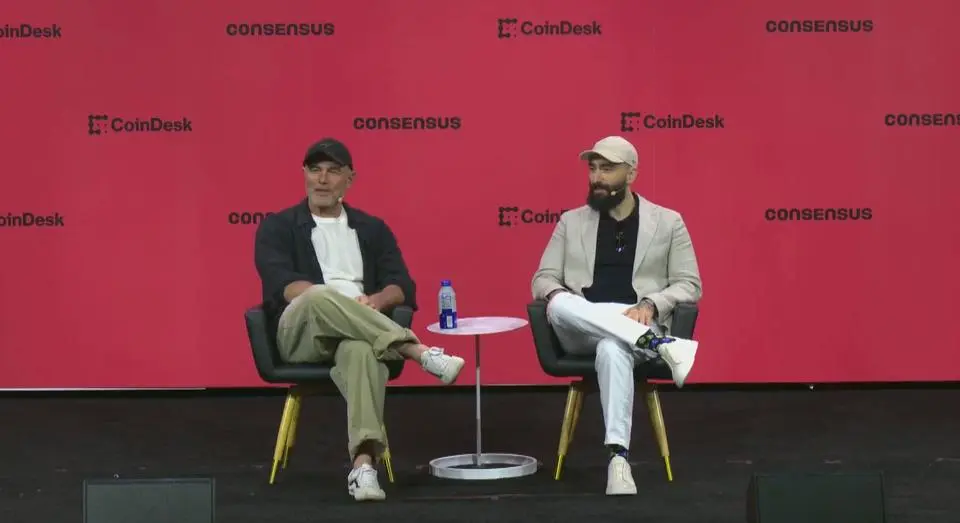
Zcash, a leading privacy-focused cryptocurrency, has announced an ambitious roadmap to introduce quantum-recoverable wallets within a month and achieve full post-quantum security within 12 to 18 months. The announcement, made by CEO Zooko Wilcox at a recent industry event, positions Zcash as one of the first major cryptocurrencies to proactively address the emerging threat of quantum computing to blockchain security. The upgrade comes alongside a broader scaling push aimed at achieving transaction throughput comparable to Visa and Mastercard, as well as a 110% rally in its native token ZEC over the past 30 days fueled by a major investment from Multicoin Capital.
Why Quantum Computing Matters for Cryptocurrencies
Quantum computers, once fully realized, could break the cryptographic foundations that secure most blockchains. Bitcoin, Ethereum, and Zcash currently rely on public-key cryptography (such as ECDSA and EdDSA) and hash functions that are vulnerable to Shor's algorithm and Grover's algorithm. Shor's algorithm can efficiently factor large integers and compute discrete logarithms, which would compromise the elliptic curve cryptography used in most wallets and transactions. While large-scale quantum computers are not yet operational, experts estimate they could become a threat within 10 to 20 years. Zcash's preemptive move is a strategic effort to future-proof its network, especially given its focus on privacy and long-term value storage.
Understanding Zcash's Quantum-Ready Approach
The first phase involves rolling out quantum-recoverable wallets within a month. These wallets will allow users to recover their funds in the event that their private keys are compromised by a quantum attack. The technology leverages a combination of post-quantum signatures and backup mechanisms, enabling users to prove ownership of funds even if the underlying private key is no longer secret. This is a significant differentiator from other cryptocurrencies, where a compromised private key often means irreversible loss. The full post-quantum upgrade, expected within 12-18 months, will replace the entire cryptographic backbone of Zcash with quantum-resistant algorithms, such as lattice-based or hash-based signatures. The Zcash development team, including the non-profit Electric Coin Company and the Zcash Foundation, has been researching post-quantum cryptography for years, collaborating with academic institutions and security firms.
Scaling Ambitious: Visa-Level Throughput
Alongside quantum resistance, Zcash is targeting a major scaling leap. Current transaction throughput on Zcash is limited to around 100 transactions per second, far below Visa's thousands of transactions per second. The team is exploring a combination of layer-2 solutions, such as zkSync-style rollups, and on-chain optimizations including reduced block times and increased block size. The goal is to handle Visa- and Mastercard-level volumes while preserving privacy. This scaling push is critical for Zcash to compete not only with traditional financial systems but also with faster blockchains like Solana and Avalanche. The roadmap includes transitioning to a proof-of-stake consensus mechanism, which would reduce energy consumption and enable more efficient governance.
Market Momentum and Investor Interest
ZEC has surged 110% in the past 30 days, driven by a combination of the quantum-resistance narrative and a hefty investment from Multicoin Capital. The venture capital firm, known for its bets on infrastructure and privacy coins, made a multi-million dollar purchase of ZEC tokens and committed to supporting Zcash's development. The rally reflects renewed market interest in privacy-focused crypto assets, especially in light of increasing regulatory scrutiny and surveillance capabilities. Zcash's shielded pool, which allows for completely private transactions, now holds approximately 30% of all circulating ZEC—a steady increase from 15% two years ago. This growth is attributed to easier cross-chain swaps into shielded ZEC via Near Intents and other interoperability solutions, enabling users to privately send value from other blockchains.
Governance and Network Upgrades
Proposals currently under discussion include reducing block times from the current 75 seconds to around 45 seconds, aiming for faster confirmations and lower latency. Additionally, the community is considering introducing token-holder voting for protocol upgrades, moving away from the current primarily developer-driven governance model. This would empower ZEC holders to directly influence future decisions, including which post-quantum algorithms to adopt and how to allocate the development treasury. The Zcash ecosystem has also seen a resurgence in development activity, with multiple teams working on wallets, DeFi integrations, and privacy-preserving tools.
Broader Context: Privacy and Quantum Resistance
Zcash's push comes at a time when the entire crypto industry is grappling with privacy and security. While privacy coins like Monero and Dash have faced delistings and regulatory challenges, Zcash has maintained a more compliant profile by offering optional privacy (shielded vs. transparent transactions). Quantum resistance could further legitimize Zcash as a store of value and medium of exchange that remains secure against future threats. Several other projects, including Bitcoin (through proposals like BitVM and quantum-resistant signatures), Ethereum (via account abstraction), and specialized quantum-proof blockchains like QANplatform, are also exploring post-quantum solutions. However, Zcash's timeline for a full upgrade within two years is aggressive and ambitious.
Technical Challenges Ahead
Implementing post-quantum cryptography on a live blockchain is no small feat. It requires careful transition periods, backward compatibility, and robust testing to ensure that quantum-resistant algorithms do not introduce new vulnerabilities or degrade performance. Zcash's existing shielded transactions rely on zk-SNARKs, which themselves may need to be replaced with quantum-resistant zero-knowledge proofs, such as those based on lattice assumptions. The team is evaluating several candidate schemes from NIST's post-quantum cryptography standardization project. Another challenge is maintaining user privacy during the migration—users must be able to move funds from old to new addresses without revealing transaction histories. The quantum-recoverable wallets are a first step in this direction, providing a safety net for early adopters.
Adoption and Ecosystem Growth
Adoption of Zcash is accelerating through cross-chain bridges and decentralized exchanges. Near Intents, a cross-chain protocol, allows users to swap assets from Ethereum, Solana, and other networks directly into shielded Zcash pools, without leaving a trace. This has significantly increased the liquidity and use of shielded ZEC. The team is also working on integrating Zcash with major wallets and custody providers, making it easier for institutional investors to hold ZEC in compliance with regulations. The Multicoin investment has likely opened doors to more institutional interest, as the firm is known for its deep network in the crypto finance space.
Governance Proposals and Community Sentiment
The community is actively debating proposals that would alter the network's consensus and governance. Reducing block times could improve user experience but may increase orphan rates and centralization pressures if not implemented carefully. Token-holder voting would decentralize decision-making but could lead to governance attacks or low turnout. Zcash has historically been led by a small core team, but as the ecosystem matures, broader participation is seen as necessary for long-term sustainability. The proposals are expected to be put to a formal vote via a governance mechanism similar to that of Decred or Tezos.
Looking Ahead: The Quantum-Ready Future
Zcash's roadmap positions it at the forefront of cryptographic innovation. By addressing quantum threats now, the network aims to ensure that its privacy guarantees hold for decades to come. The simultaneous scaling push to match Visa and Mastercard throughput demonstrates an ambition to become a ubiquitous payment network, not just a niche privacy coin. While challenges remain—regulatory uncertainty, technical hurdles, and competition—the combination of quantum resistance, privacy, and scalability could make Zcash a cornerstone of the future digital economy. The next few months will be crucial as the first quantum-recoverable wallets are rolled out, setting the stage for a full post-quantum transition by 2027.
Source: Coindesk News